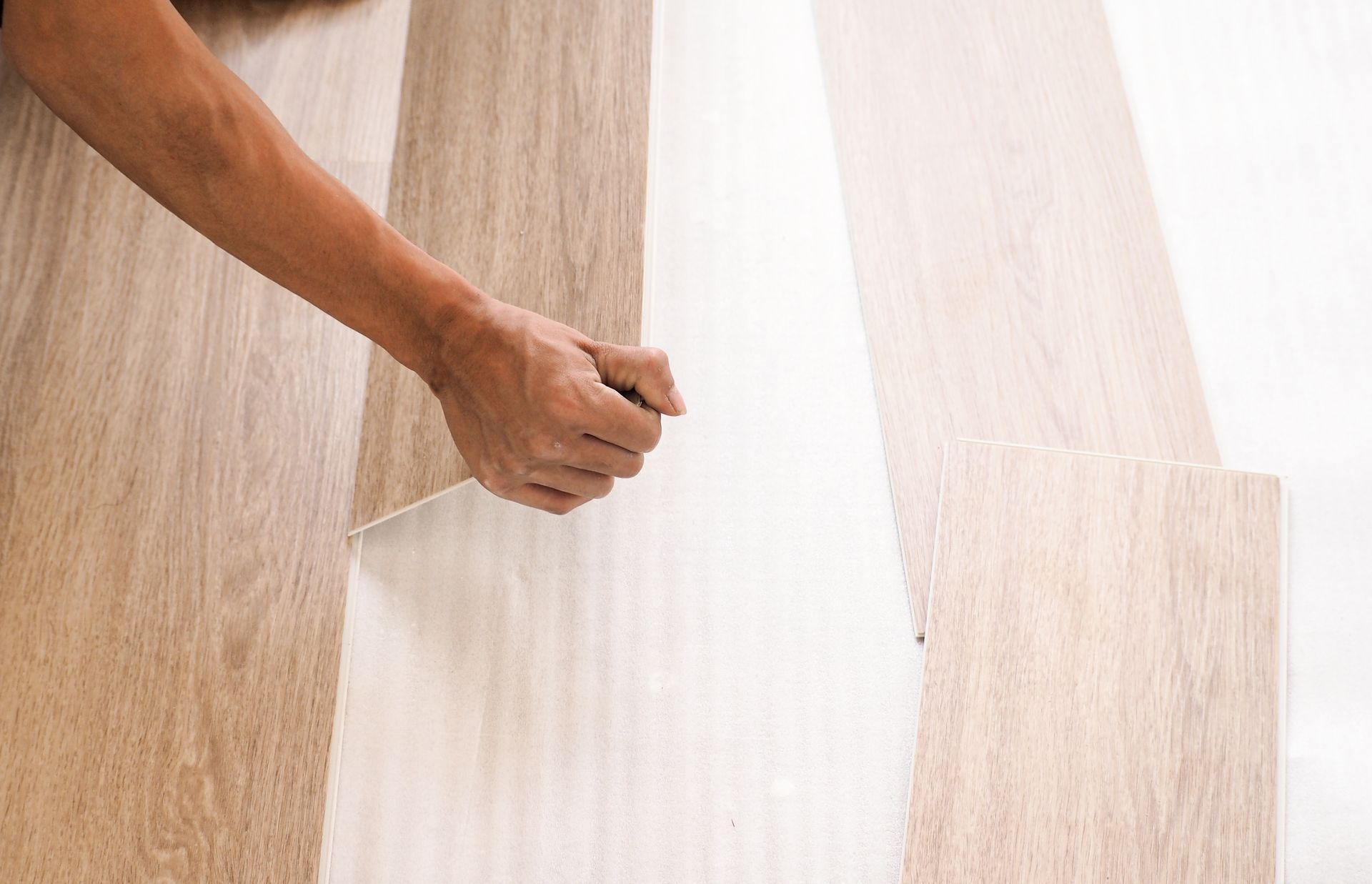

Floors Prepared From the Subfloor Up
Hardwood & LVP Flooring Installation in Nacogdoches for moisture-prone rooms, uneven subfloors, and high-use living areas
Waterproof LVP and engineered hardwood perform at their rated lifespan only when installed over a properly prepared subfloor—the material above is only as stable as what lies beneath it. Dan Matlock Tile & Repair installs hardwood and luxury vinyl plank flooring in Nacogdoches with subfloor inspection and correction as a standard part of the process, not an add-on. Homeowners who have had previous flooring installations fail at seams, develop cupping, or begin separating at joints typically discover the underlying issue was subfloor flatness or moisture that was never addressed before the new material went down.
LVP's waterproof core makes it a practical choice for East Texas homes where slab-on-grade construction and high ambient humidity create moisture conditions that solid hardwood can't tolerate without significant expansion and contraction. Engineered hardwood—constructed with a real wood veneer over a dimensional-stable plywood core—handles those humidity fluctuations better than solid hardwood while still producing a surface that reads and refinishes like real wood. The choice between these products depends on the specific room, its subfloor type, and how much vertical height the installation can accommodate at transitions to adjacent flooring.
Request a subfloor assessment to determine which flooring product and installation method fits your specific room conditions before material is ordered..
What Proper Hardwood and LVP Installation Requires
Subfloor preparation involves checking for flatness across the entire field—LVP manufacturers typically specify no more than 3/16 inch variation over a 10-foot span for a floating installation to perform correctly. High spots are ground down and low spots filled with floor-leveling compound, both of which must cure fully before flooring is installed. Skipping this step produces a floor that feels soft or springy underfoot in low areas and develops stress cracks at locking joints where the plank bridges an unsupported gap over time.
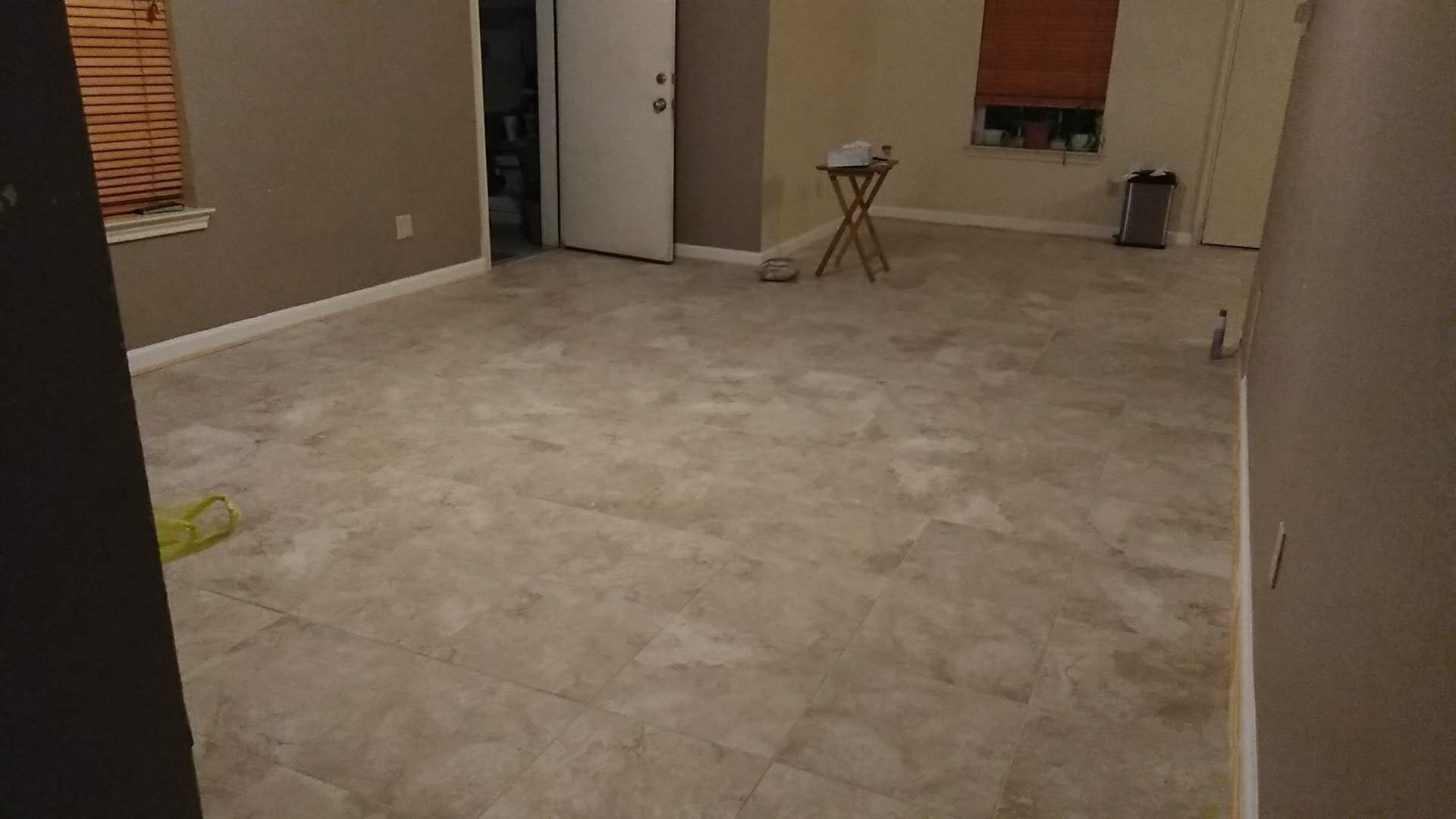
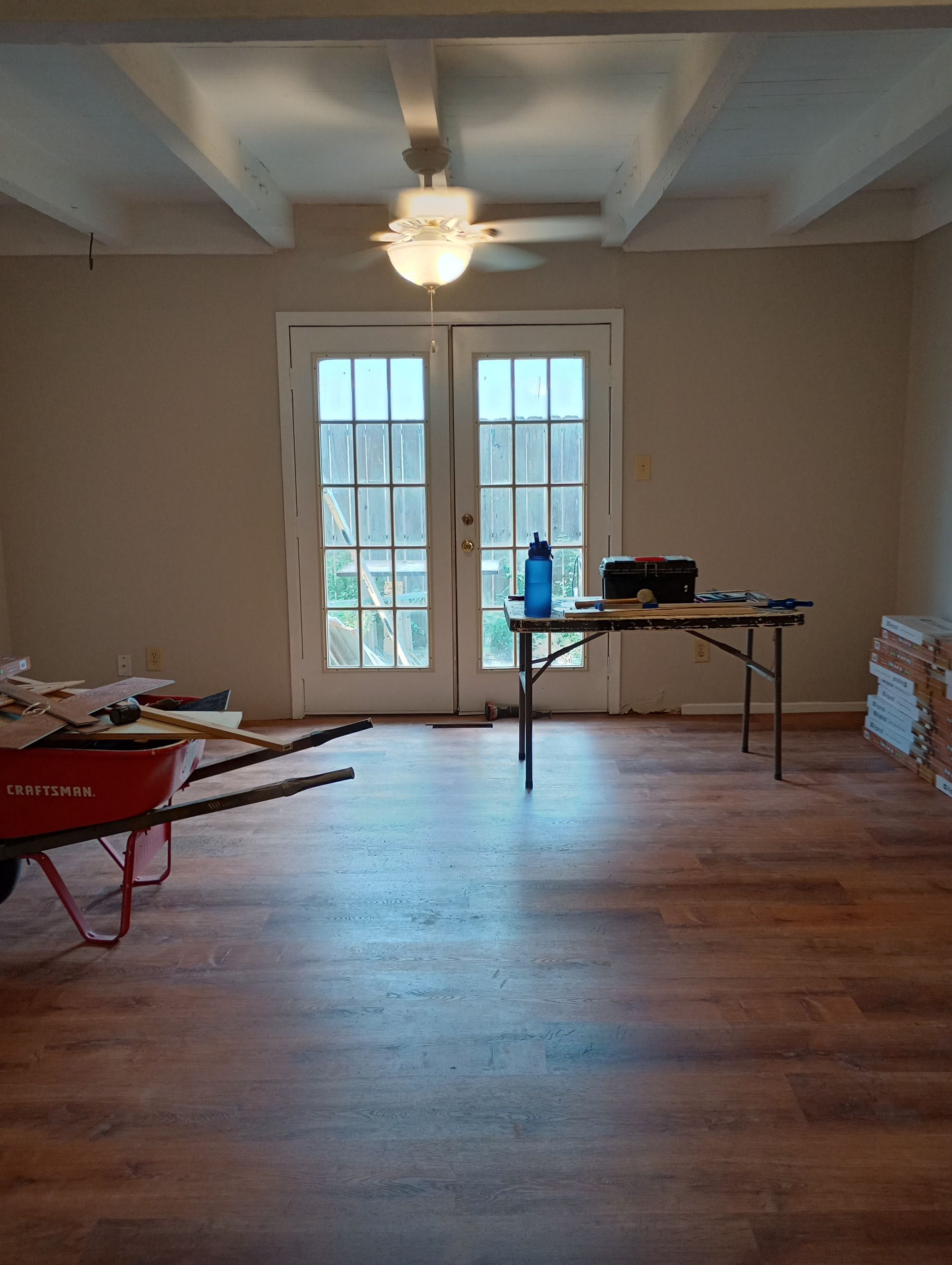
After installation, the completed floor shows consistent plank direction with staggered end joints that don't align within the same visual zone—end joint stacking is a quality control failure that creates weak points in floating floor systems. Transitions at doorways, stairs, and adjacent flooring types are finished with the correct profile—T-molding, reducer, or threshold—depending on the height relationship between the two surfaces. The floor surface itself should have no hollow sound when walked across, indicating full contact between the plank and subfloor rather than bridging over low spots.
Dan Matlock Tile & Repair factors in the acclimation requirement for both engineered hardwood and LVP before installation begins—planks need time at the job site to reach equilibrium with the room's temperature and humidity conditions, which in East Texas can differ significantly from the climate-controlled warehouse where materials are stored. Installing before acclimation is complete produces boards that shift dimensionally after the floor is locked together, resulting in gaps or buckling that appear days or weeks after the crew has left.
Answers to Frequent Flooring Installation Questions
These questions address the practical decisions homeowners face when choosing between flooring materials and evaluating what an installation actually involves.
- What makes LVP a better choice than solid hardwood in slab-on-grade East Texas homes? Concrete slabs transmit ground moisture upward, and solid hardwood absorbs that moisture and expands—LVP's waterproof core doesn't react to moisture from below, making it dimensionally stable in those conditions.
- How does subfloor type affect which installation method is used? Concrete subfloors use a floating or glue-down method depending on LVP thickness and product specs, while plywood subfloors can accommodate nail-down engineered hardwood as well as floating LVP installations.
- Why does end joint staggering matter for LVP floor performance? Staggered end joints distribute stress across the locking system rather than concentrating it along a single line, which prevents joint separation and maintains the floor's structural integrity under furniture and foot traffic.
- When should a homeowner choose engineered hardwood over LVP? Engineered hardwood is appropriate when a client wants a surface that can be sanded and refinished over time, or when the design requires a material that responds to staining and finishing like real wood.
- How does humidity in Nacogdoches affect the acclimation timeline for flooring materials? Higher ambient humidity can extend the acclimation period because the material needs to reach equilibrium with actual room conditions—in humid summer months, that adjustment takes longer than in dry, air-conditioned interior environments.
Dan Matlock Tile & Repair evaluates subfloor conditions and material compatibility before any flooring is ordered—set up a site visit to review your existing floor structure and identify the right product for your specific installation conditions.