
Precision Tile Work Where Kitchens Get Used
Kitchen Backsplash Installation in Nacogdoches for grease-exposed walls, mismatched surfaces, and custom pattern layouts
A kitchen backsplash that stays flat, clean, and visually consistent after years of cooking heat and cleaning products starts with precise installation decisions made before the first tile is set. Dan Matlock Tile & Repair installs kitchen backsplashes in Nacogdoches using materials suited to the specific demands of cooking surfaces—glass, ceramic, porcelain, and natural stone each behave differently near heat sources and require different adhesive and grout choices to maintain long-term adhesion. Homeowners replacing painted drywall or outdated backsplash tile typically notice the difference in how much easier the new surface is to wipe clean after cooking.
Pattern selection introduces the most significant layout complexity. Herringbone arrangements require diagonal reference lines and consistent cutting angles throughout, while subway tile in a traditional brick offset pattern demands careful horizontal level control so the offset doesn't drift across a long wall run. Glass tile is optically unforgiving—any adhesive color variation or uneven troweling shows through the tile face, which is why white or gray polymer-modified thinset is the correct choice for glass rather than standard gray cement adhesive.
Schedule an on-site measurement to review layout options and material suitability for your specific kitchen configuration..
How Backsplash Installation Addresses the Hardest Details
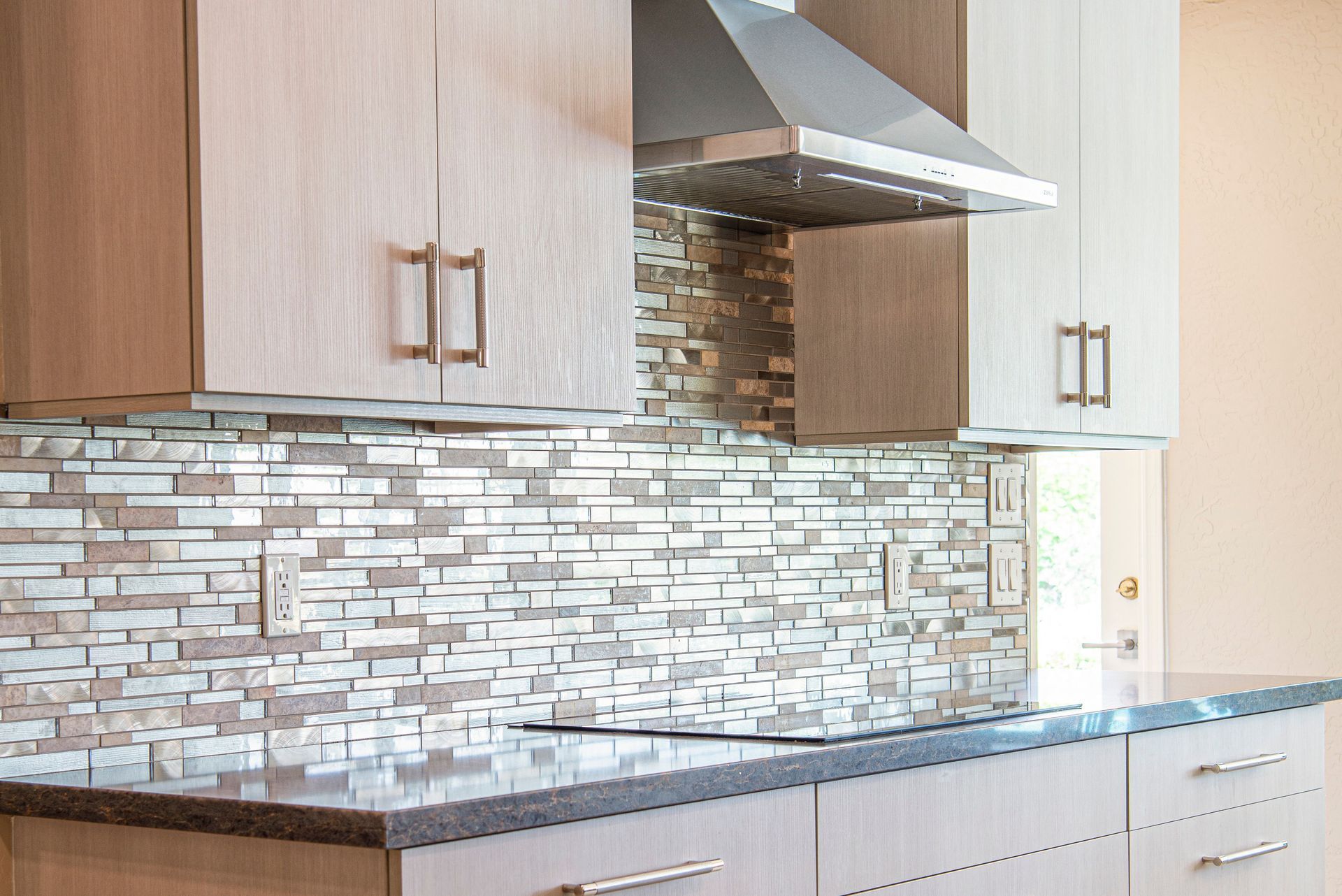
The most technically demanding portions of a kitchen backsplash installation occur at outlets, switch plates, cabinet edges, and the transition between the countertop and the first course of tile. Outlet cutouts in ceramic or porcelain require a hole saw or oscillating tool to produce a clean opening that the cover plate seats against without cracking the tile—a measurement error of even a few millimeters produces a gap that no plate will fully hide. Cabinet edge transitions need a consistent reveal, typically finished with a pencil liner, metal edge trim, or bullnose tile depending on the material thickness and the design intent.
Once installation and grouting are complete, the backsplash surface reads as a continuous plane rather than a collection of individual tiles—grout joints align through inside corners, pattern repeats hold consistent spacing across the full width, and cut tiles at the edges are sized symmetrically on both sides of a centered layout. Natural stone backsplashes require sealing before grouting and again after, which affects the installation timeline but protects the material from absorbing cooking grease that would otherwise stain permanently.
Dan Matlock Tile & Repair accounts for the full kitchen wall geometry during layout, including window sills, range hood positioning, and upper cabinet soffits, because each of those elements affects where full tiles land and how cut pieces are distributed across the wall. A layout that places small slivers of tile at the most visible points—directly above the range or centered on the window—indicates planning that didn't start from a centered reference line..
What Homeowners Usually Ask Before Starting
These questions reflect what most homeowners want to understand about material behavior, installation process, and what distinguishes a well-executed backsplash from one that develops problems after a few years.
- What grout type works best for a kitchen backsplash near a range? Epoxy grout resists staining from cooking grease and doesn't require sealing, making it a practical choice for the area directly behind a range even when standard cement grout is used elsewhere.
- How does natural stone backsplash installation differ from ceramic or porcelain? Stone requires sealing before and after grouting, uses a white thinset to avoid color bleed, and may need back-buttering on each piece to achieve full coverage behind the uneven rear surface.
- Why does tile pattern choice affect how long installation takes? Herringbone and other diagonal layouts require more cuts per square foot than straight-set patterns because each tile meets adjacent tiles at an angle rather than a flat edge.
- When is the backsplash area in Nacogdoches homes typically ready for use after installation? Thinset cure time before grouting and grout cure time before full use both depend on ambient temperature and humidity, which in East Texas can extend slightly during humid summer months.
- What should I look for to evaluate whether a backsplash installation was done correctly? Grout joints should be consistent in width throughout, tile faces should be flush without lippage, and all outlet cutouts should sit cleanly within the tile field without visible gaps at the cover plate.
Dan Matlock Tile & Repair brings the same layout precision to small accent backsplashes and full kitchen wall installations—arrange a site visit to review your wall dimensions, outlet placement, and preferred materials before work begins.